
 ,
Arsene Engueno Abena,
Emilienne Laure Ngahane,
Charles Degaule Sap Sap,
Mbezele Junior Yannick Ngaba
,
Arsene Engueno Abena,
Emilienne Laure Ngahane,
Charles Degaule Sap Sap,
Mbezele Junior Yannick Ngaba
Logging activities significantly impact climate change by contributing to greenhouse gas emissions. However, scientific data on this subject for African forests is limited. This study assesses carbon emission rates resulting from selective logging in Cameroon and proposes measures to mitigate emissions associated with this activity. The research was conducted in Annual Cutting Area 3-1 of Forest Management Unit 1525, known as the "Municipal Forest of Efoulan and Ebolowa 1st." Field data on damaged and extracted biomass were collected across three 15-ha plots and compiled in Microsoft Excel. GPS-derived spatial data were processed using DNRGPS and visualized with ArcGIS 10.5. Allometric equations were applied to dendrometric measurements to estimate aboveground biomass, which was converted to carbon using a factor of 0.5. Emission factors were calculated per cubic meter of extracted wood, and polynomial regression models were used to extrapolate results to the entire cutting area. Open-ended questionnaires administered to site staff and direct field observations evaluated logging technique compliance. Data analysis revealed a logging intensity of 1.6 stems/ha with an average extracted volume of 16.18 m³/ha. Infrastructure construction was identified as the primary source of carbon emissions at 0.497 t C/m³, followed by residues from extracted wood at 0.412 t C/m³. The overall emission factor was 1.067 t C/m³ logged, totaling approximately 17.072 t C/ha. Evaluation of logging techniques indicated that low-impact logging practices (LIP) were applied only 35% of the time. A work procedure code aligned with the regional LIP code has been proposed to reduce emissions. The findings underscore the urgent need for improved forest management practices that prioritize sustainability and carbon sequestration, with stakeholder engagement enhancing implementation effectiveness.
| Published in | International Journal of Natural Resource Ecology and Management (Volume 11, Issue 1) |
| DOI | 10.11648/j.ijnrem.20261101.16 |
| Page(s) | 56-67 |
| Creative Commons |
This is an Open Access article, distributed under the terms of the Creative Commons Attribution 4.0 International License (http://creativecommons.org/licenses/by/4.0/), which permits unrestricted use, distribution and reproduction in any medium or format, provided the original work is properly cited. |
| Copyright |
Copyright © The Author(s), 2026. Published by Science Publishing Group |
Annual Cutting Area, Cameroon, Logging Damage, Carbon Emissions, Selective Logging, Greenhouse, Logging Intensity
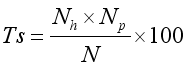 (1)
(1) 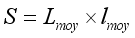 (2)
(2)  (3)
(3)  (4)
(4)  (5)
(5) 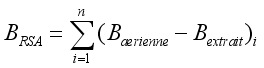 (6)
(6)  (7)
(7) 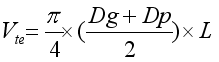 (8)
(8) 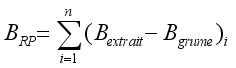 (9)
(9) 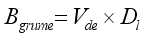 (10)
(10)  = wood density of the relevant fuel,
  = wood density of the relevant fuel.
 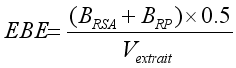 (11)
(11) 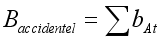 (12)
(12)  represents the biomass accidentally damaged during the tree fall;
  represents the biomass of the trees identified as damaged.
 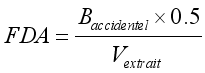 (13)
(13) 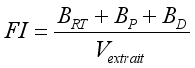 (14)
(14)  (damaged biomass for road construction);
  (damaged biomass for park construction);
  (damaged biomass for the construction of logging roads);
  (Volume extracted from the plots); 0.5: Weighting factor (this coefficient is applied to adjust the overall impact of the infrastructures).
 Plot | Exploitation Intensity (stems/ha) | Park Area (m²) | % Occupied | N° of Damaged Trees (/ha) | |
|---|---|---|---|---|---|
(a) Damage caused by the opening of parks | |||||
P1 | 1.60 | 15.70 | 639.4 | 0.4 | |
P2 | 1.66 | 17.44 | 925.0 | 0.6 | |
1.66 | 15.38 | 0 | 0 | ||
Average | 1.64 ± 0.03 | 16.18 ± 1.10 | 782.2 | 0.5 | |
(b) Damage caused by road construction | |||||
P1 | 18.87 | 10.27 | 2906.49 | 2 | 7.0 |
P2 | 21.69 | 11.07 | 3601.09 | 2 | 7.6 |
P3 | 0 | 0 | 0 | 0 | 0 |
Average | 20.28 | 10.67 ± 0.57 | / | 2 | 7.3 |
(c) Damage caused by skidding (log extraction) | |||||
P1 | 100.8 | 5.0 | 7561.79 | 5 | 11.0 |
P2 | 112.5 | 4.4 | 7426.99 | 5 | 11.9 |
P3 | 48.5 | 5.98 | 4350.68 | 3 | 7.9 |
Average | 87.3 ± 34.1 | 5.13 ± 0.79 | / | 4 ± 1 | 10.3 ± 2.09 |
Parameters | P1 | P2 | P3 | Average |
|---|---|---|---|---|
(a) Emissions from wood extracted from AAC 3-1 | ||||
BRSA (tons) | 156.907 | 168.800 | 240.751 | 188.819 ± 45.36 |
BRP (tons) | 7.957 | 10.763 | 11.154 | 9.958 ± 1.74 |
Total residue biomass (tons) | 164.864 | 179.563 | 251.905 | 198.777 ± 46.6 |
EBE (tons C/m³) | 0.350 | 0.343 | 0.545 | 0.412 ± 0.11 |
(b) Biomass damaged due to felling | ||||
Plot | P1 | P2 | P3 | Average |
Collateral damage biomass (tons) | 57.850 | 85.514 | 86.931 | 76.765 ± 16.39 |
FDA (tons C/m³) | 0.122 | 0.163 | 0.188 | 0.158 ± 0.03 |
(c) Emissions due to the construction of forest infrastructures | ||||
Plot | P1 | P2 | P3 | Average |
Skidding trail biomass (tons) | 177.302 | 184.952 | 79.717 | 147.324 ± 58.67 |
Road biomass (tons) | 173.666 | 170.676 | / | 122.171 |
Park biomass (tons) | 12.719 | 42.523 | / | 27.621 |
FI (tons C/m³) | 0.559 | 0.761 | 0.172 | 0.497 ± 0.29 |
Activity | Evaluated Parameter | Observation | EFI Prescription |
|---|---|---|---|
Pre-exploitation Planning | Road network layout | Done during exploitation | Should be done one year before exploitation |
Skidding trail network layout | Done during exploitation | Should be done a few weeks or months before exploitation | |
Loading park | Done during exploitation | Should be done a few weeks or months before exploitation | |
Implementation | Road construction | Insufficient sunlight width | Limit sunlight width as much as possible |
Not considered | Favor road placement on ridges in easy or moderately rugged terrain | ||
Skidding | Operator creates own routes | Operator with tractor should stick to marked trails and avoid opening new ones | |
Too many turns | Trails should be as straight as possible; avoid sharp turns to prevent damage to trees along the trail | ||
Tractor leaves trail to get closer to the log | Tractor is not normally allowed to leave the trail; it should extract the stump | ||
Park creation | Average park area is about 700 m² | Average loading park area should range between 600 and 1200 m² | |
Not enough parks opened | Minimize the number of parks opened | ||
Park is a meeting point for multiple parks | Park should be located at the convergence point of several skidding trails | ||
Felling | Felling technique | Conventional felling | Use controlled felling |
Topping and pruning | Topping and pruning during skidding | Perform topping and pruning at the same time as felling | |
Topping depends on the diameter of the end | Top as much as possible beyond the first large branch | ||
Total abandonment of buttresses | Recover the base of the trunk with buttresses by cutting them longitudinally to obtain a cylindrical shape | ||
Processing | Bucking | Bucking at the level of buttresses | Do not cut the base of the trunk with buttresses; cut them longitudinally to obtain a cylindrical log |
Logs only from the stem | Form logs not only from the stem but also from large branches of the crown to recover maximum volume and timber value | ||
Waste Management | None |
AGB | Aboveground Biomass |
D | Diameter |
DFL | Damage Factor Related to Logging |
DBH | Diameter at Breast Height |
EBE | Emissions Due to Extracted Wood |
EEW | Emissions From Extracted Wood |
EF | Emission Factors |
FDA | Damage Factor of Logging |
FI | Factor of Logging Infrastructure |
RBLS | Remaining Biomass at Logging Sites |
| [1] | Justice, C., et al. “Central African Forests, Carbon and Climate Change”. Climate Research, 2001. 17: p. 229-246. |
| [2] | Keddy, P. A., et al. “Wet and Wonderful: The World's Largest Wetlands Are Conservation Priorities”. Bioscience, 2009. 59(1): p. 39-51. |
| [3] | Burgin, L., et al. “Insights on Climate Risks to the Central African Forest Ecosystems: An Interdisciplinary Review”. Climate Resilience and Sustainability, 2025. 4(1). |
| [4] | Sonwa, D., et al. “Potential Synergies of the Main Current Forestry Efforts and Climate Change Mitigation in Central Africa”. Sustainability Science, 2010. 6(1): p. 59-67. |
| [5] | Hansen, M. C., et al. “The Fate of Tropical Forest Fragments”. Science Advances, 2020. 6(11). |
| [6] | Malhi, Y., et al. “Climate Change and Ecosystems: Threats, Opportunities and Solutions”. Philosophical Transactions of the Royal Society B Biological Sciences, 2020. 375(1794): p. 20190104. |
| [7] | Slagter, B., K. A. Fesenmyer, and J. Reiche. “Rapid Monitoring of Congo Basin Logging Roads With Sentinel-1 and Sentinel-2 Data”. 2023. |
| [8] | Bellassen, V. and V. Gitz. “Reducing Emissions From Deforestation and Degradation in Cameroon — Assessing Costs and Benefits”. Ecological Economics, 2008. 68(1-2): p. 336-344. |
| [9] | Richard, S. “Obstacles to a Conceptual Framework for Sustainable Forest Management Under REDD in Central Africa: A Two-Country Analysis”. 2012. |
| [10] | Kumar, A., et al. “Facile hetero-assembly of superparamagnetic Fe3O4/BiVO4 stacked on biochar for solar photo-degradation of methyl paraben and pesticide removal from soil”. Journal of Photochemistry and Photobiology a-Chemistry, 2017. 337: p. 118-131. |
| [11] | Miller, S. D., et al. “Reduced Impact Logging Minimally Alters Tropical Rainforest Carbon and Energy Exchange”. Proceedings of the National Academy of Sciences, 2011. 108(48): p. 19431-19435. |
| [12] | Pearson, T. R., Sandra Brown, and Felipe M. Casarim. “Carbon emissions from tropical forest degradation caused by logging”. Environmental Research Letters, 2014. 9.3(034017). |
| [13] | Fayolle, A., et al. “Reviser Les Tarifs De Cubage Pour Mieux Gerer Les Forêts Du Cameroun”. Bois & Forets Des Tropiques, 2013. 317(317): p. 35. |
| [14] | Hwang, K., et al. “Amount and Location of Damage to Residual Trees From Cut-to-Length Thinning Operations in a Young Redwood Forest in Northern California”. Forests, 2018. 9(6): p. 352. |
| [15] | Biwôle, A. B., et al. “Dynamique Des Populations D'azobe, Lophira Alata Banks Ex C. F. Gaertn., Et Implications Pour Sa Gestion Durable Au Cameroun”. Bois & Forets Des Tropiques, 2019. 342. |
| [16] | Lewis, R. “Mt Apo and Other National Parks in the Philippines”. Oryx, 1988. 22(2): p. 100-109. |
| [17] | Iddris, N. A. “Trace Gas Fluxes From Soils and Tree Stems of Rainforests and Cacao Agroforests in the Congo Basin, Cameroon”. |
| [18] | Alemagi, D., et al. “Analyzing the Contribution of Cameroon’s Council Forests to Climate Change Mitigation and Socioeconomic Development”. 2016. |
| [19] | Toan, T. L., et al. “Comparison of Optical and SAR Data for Forest Cover Mapping: REDD+ May Be Helped by SAR Data”. 2014: p. 2305-2308. |
APA Style
Lontsi, R. T., Abena, A. E., Ngahane, E. L., Sap, C. D. S., Ngaba, M. J. Y. (2026). Carbon Emissions from Selective Logging: Case of FMU 1525 (Southern Cameroon). International Journal of Natural Resource Ecology and Management, 11(1), 56-67. https://doi.org/10.11648/j.ijnrem.20261101.16
ACS Style
Lontsi, R. T.; Abena, A. E.; Ngahane, E. L.; Sap, C. D. S.; Ngaba, M. J. Y. Carbon Emissions from Selective Logging: Case of FMU 1525 (Southern Cameroon). Int. J. Nat. Resour. Ecol. Manag. 2026, 11(1), 56-67. doi: 10.11648/j.ijnrem.20261101.16
@article{10.11648/j.ijnrem.20261101.16,
  author = {Rodine Tchiofo Lontsi and Arsene Engueno Abena and Emilienne Laure Ngahane and Charles Degaule Sap Sap and Mbezele Junior Yannick Ngaba},
  title = {Carbon Emissions from Selective Logging: Case of FMU 1525 (Southern Cameroon)},
  journal = {International Journal of Natural Resource Ecology and Management},
  volume = {11},
  number = {1},
  pages = {56-67},
  doi = {10.11648/j.ijnrem.20261101.16},
  url = {https://doi.org/10.11648/j.ijnrem.20261101.16},
  eprint = {https://article.sciencepublishinggroup.com/pdf/10.11648.j.ijnrem.20261101.16},
  abstract = {Logging activities significantly impact climate change by contributing to greenhouse gas emissions. However, scientific data on this subject for African forests is limited. This study assesses carbon emission rates resulting from selective logging in Cameroon and proposes measures to mitigate emissions associated with this activity. The research was conducted in Annual Cutting Area 3-1 of Forest Management Unit 1525, known as the "Municipal Forest of Efoulan and Ebolowa 1st." Field data on damaged and extracted biomass were collected across three 15-ha plots and compiled in Microsoft Excel. GPS-derived spatial data were processed using DNRGPS and visualized with ArcGIS 10.5. Allometric equations were applied to dendrometric measurements to estimate aboveground biomass, which was converted to carbon using a factor of 0.5. Emission factors were calculated per cubic meter of extracted wood, and polynomial regression models were used to extrapolate results to the entire cutting area. Open-ended questionnaires administered to site staff and direct field observations evaluated logging technique compliance. Data analysis revealed a logging intensity of 1.6 stems/ha with an average extracted volume of 16.18 m³/ha. Infrastructure construction was identified as the primary source of carbon emissions at 0.497 t C/m³, followed by residues from extracted wood at 0.412 t C/m³. The overall emission factor was 1.067 t C/m³ logged, totaling approximately 17.072 t C/ha. Evaluation of logging techniques indicated that low-impact logging practices (LIP) were applied only 35% of the time. A work procedure code aligned with the regional LIP code has been proposed to reduce emissions. The findings underscore the urgent need for improved forest management practices that prioritize sustainability and carbon sequestration, with stakeholder engagement enhancing implementation effectiveness.},
 year = {2026}
}
TY  - JOUR
T1  - Carbon Emissions from Selective Logging: Case of FMU 1525 (Southern Cameroon)
AU  - Rodine Tchiofo Lontsi
AU  - Arsene Engueno Abena
AU  - Emilienne Laure Ngahane
AU  - Charles Degaule Sap Sap
AU  - Mbezele Junior Yannick Ngaba
Y1  - 2026/03/04
PY  - 2026
N1  - https://doi.org/10.11648/j.ijnrem.20261101.16
DO  - 10.11648/j.ijnrem.20261101.16
T2  - International Journal of Natural Resource Ecology and Management
JF  - International Journal of Natural Resource Ecology and Management
JO  - International Journal of Natural Resource Ecology and Management
SP  - 56
EP  - 67
PB  - Science Publishing Group
SN  - 2575-3061
UR  - https://doi.org/10.11648/j.ijnrem.20261101.16
AB  - Logging activities significantly impact climate change by contributing to greenhouse gas emissions. However, scientific data on this subject for African forests is limited. This study assesses carbon emission rates resulting from selective logging in Cameroon and proposes measures to mitigate emissions associated with this activity. The research was conducted in Annual Cutting Area 3-1 of Forest Management Unit 1525, known as the "Municipal Forest of Efoulan and Ebolowa 1st." Field data on damaged and extracted biomass were collected across three 15-ha plots and compiled in Microsoft Excel. GPS-derived spatial data were processed using DNRGPS and visualized with ArcGIS 10.5. Allometric equations were applied to dendrometric measurements to estimate aboveground biomass, which was converted to carbon using a factor of 0.5. Emission factors were calculated per cubic meter of extracted wood, and polynomial regression models were used to extrapolate results to the entire cutting area. Open-ended questionnaires administered to site staff and direct field observations evaluated logging technique compliance. Data analysis revealed a logging intensity of 1.6 stems/ha with an average extracted volume of 16.18 m³/ha. Infrastructure construction was identified as the primary source of carbon emissions at 0.497 t C/m³, followed by residues from extracted wood at 0.412 t C/m³. The overall emission factor was 1.067 t C/m³ logged, totaling approximately 17.072 t C/ha. Evaluation of logging techniques indicated that low-impact logging practices (LIP) were applied only 35% of the time. A work procedure code aligned with the regional LIP code has been proposed to reduce emissions. The findings underscore the urgent need for improved forest management practices that prioritize sustainability and carbon sequestration, with stakeholder engagement enhancing implementation effectiveness.
VL  - 11
IS  - 1
ER  -
Department of Forestry, Wood Science and Technology, Higher Institute of Agriculture, Wood, Water, and Environment (ISABEE), University of Ebolowa, Ebolowa, Cameroon
Society Jerun and Company Sarl, Ebolowa, Cameroon
Department of Forestry, Wood Science and Technology, Higher Institute of Agriculture, Wood, Water, and Environment (ISABEE), University of Ebolowa, Ebolowa, Cameroon
Society Jerun and Company Sarl, Ebolowa, Cameroon
Department of Forestry, Wood Science and Technology, Higher Technical Teachers Training College (HTTTC), University of Ebolowa, Ebolowa, Cameroon
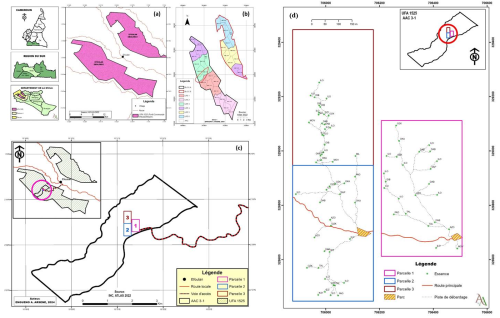
Figure 1. Administrative location of FMU 1525 (a), geographic distribution of AAC within FMU 1525 (b), and location of sampled plots in AAC 3-1 (c-d).
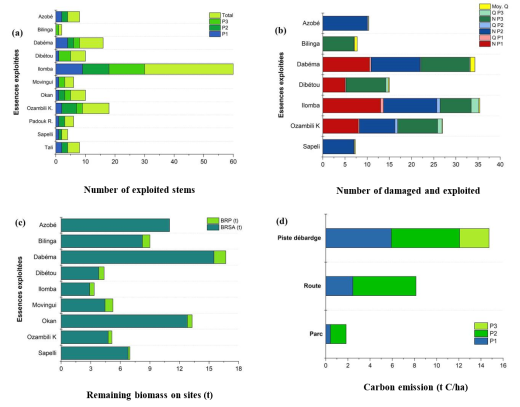
Figure 2. Exploited species and the intensity of exploitation in the AAC are as follows: (a) damage from logging to the residual stand, (b) biomass remaining at the logging site and in the park, (c) and carbon emissions resulting from the construction of forest infrastructure. Here, N represents the number of damaged trees from logging, and Q denotes the ratio of the number of trees logged to the number of damaged trees.
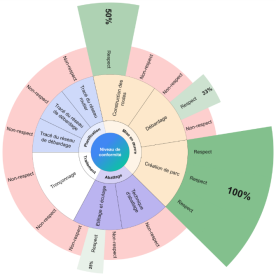
Figure 3. Level of compliance of operating activities in the AAC 3-1 with EFI requirements.
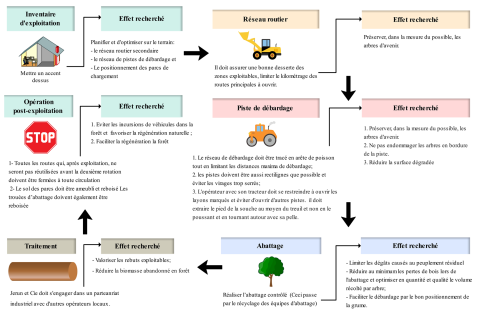
Figure 4. Proposal for a strategy to limit carbon emissions.



 Share This Article
 Twitter
 Linked In
 Facebook
 Copy
Copy Download