1. Introduction
In rural Cameroon as well as many African societies, food security remains a serious challenge as farmers always have to deal with crop failure and crop loss. In Sub Saharan Africa, 30-50% of the crops produced are lost before reaching the consumers, through predation (by animals, birds, pests) and diseases, equating to 1.3 million tons of food lost annually
| [6] | FAO (2023) Re-Gain: Scaling solutions for food loss in Africa, Green Climate Fund. |
[6]
. The Centre for Disease Control and Prevention (CDCP) in Cameroon, defines pest control as the management of weeds insects, mites and diseases. Efforts to control pests have led to increases in pesticides use since the 1950s with about 2.5 M tons annually worldwide yet, crop loss from pests has remained relatively constant
| [3] | Centers for Disease Control and Prevention. (2024, March 4). What is Integrated Pest Management? Centers for Disease Control and Prevention. |
[3]
. Crop failure also poses a serious threat to the farmers as in some areas they risk loosing about 80% of their crops to disasters like landslides, floods and strong winds
. In rural Cameroon such disasters are often attributed to spiritual attacks or witchcraft. Crop yields are greatly reduced by weeds, insects, and fungal or other pathogens and stressors and without effective crop protection, these losses would amount to 22–53% for the most economically important crops worldwide
| [12] | Mayenfisch Peter and Koerber Kasten (2024): Recent innovations in crop protection research, Science and Pests Management, https://doi.org/10.1002/ps.8441 |
[12]
.
The use of traditional knowledge to enhance food security and improve agricultural productivity is increasingly recognized by researchers. Moreover, in most rural areas the rate of acceptance and adoption of chemical insecticides and pesticides by farmers has been slow possibly due to contrasting views about the benefits and safety concerns associated with them
| [9] | Gbashi, S, Adebo, O., Adebiyi, J. A., Targuma, S., Tabele, S., Areo, O., Njobeh P. (2021). Food safety, food security and genetically modified organisms in Africa: a current perspective, Biotechnology and Genetic Engineering Reviews 37(1), 30-63. |
[9]
. Almost 86% of the farmers in rural areas have strong and positive perceptions about the effectiveness of indigenous knowledge practices in agricultural production, yet approximately 90% of the farmers are food insecure
| [21] | Olawuyi, S., Ijila, O., Adegbite, A., Olawuyi, T., & Farayola, C. (2024). Smallholder Farmers’ Use of Indigenous Knowledge Practices in Agri-food Systems: Contribution of Food Security Attainment Drive. Research on World Agricultural Economy, 5(2), 45–67.
https://doi.org/10.36956/rwae.v5i2.1056 |
[21]
. According to that study these statistics raise questions and doubts about the effectiveness of indigenous crop protection strategies. The contradiction between the positive valuation of indigenous agricultural practices on crop protection, and food insecurity of the farmers, strongly suggests the need to combine these approaches in the cultivation system with the modern agronomic techniques; such a combination might reduce the reliance on expensive chemical agricultural inputs
| [13] | Melash AA, Bogale AA, Migbaru AT, Chakilu GG, Percze A, Ábrahám ÉB, Mengistu DK (2023) Indigenous agricultural knowledge: A neglected human-based resource for sustainable crop protection and production. https://doi.org/10.1016/j.heliyon.2023.e12978 |
[13]
. A possible solution to this is to complement the indigenous practices of crop protection, with biotechnological methods as the two together could guarantee the food security of the rural population. Secondly, due to the emergence of pesticide resistance among harmful organisms which has become a significant challenge for farmers it is imperative to develop new and innovative products and modes of action in crop protection to combat crop diseases effectively
| [12] | Mayenfisch Peter and Koerber Kasten (2024): Recent innovations in crop protection research, Science and Pests Management, https://doi.org/10.1002/ps.8441 |
[12]
. Thirdly, biotechnological research on Genetically Modified Organisms (GMOs) which provide a range of opportunities (such as increased crop yields, resistance to pests and diseases, enhanced nutrient composition and food quality) in addressing the hunger, malnutrition and food security issues on the continent could be adopted by the rural farmers to ensure food security. However, these modern crop protection methods according to the farmers are costly and also risky especially given their limited knowledge of the quantities to apply and the mode of application.
One commonly reported indigenous method of crop protection in rural Cameroon is the use of botanical pesticides derived from local plant species
| [1] | Anye, A. N., Nyochembeng, L. M., & Jone, K. R. (2016). An ethnobotanical survey of medicinal and food plants of Cameroon. Journal of Medicinal Plants Research, 10(36), 619-636. |
[1]
. Numerous studies have documented the utilization of extracts and concoctions from plants such as neem (
Azadirachta indica), tobacco (
Nicotiana tabacum), and chili peppers (
Capsicum spp.) to deter or eliminate insect pests that threaten staple food crops like maize, cassava, and beans
| [8] | Fouad HA, da Câmara CAG, de Moraes MM, Tavares WS, Legaspi JC, Zanuncio JC. (2023), Insecticidal and Repellent Activities of Four Essential Oils Against Sitophilus zeamais (Coleoptera: Curculionidae). Dose Response.
https://doi.org/10.1177/15593258231210263 |
| [16] | Nchiwan, N. E., Fokunang, C. N., Tembe-Fokunang, E. A., Iroegbu, C. U., Bum, E. N., & Esimone, C. O. (2018). Ethnomedicinal uses of plants as insecticides, repellents and anti-feedents in Cameroon. Scientific African, 1, e00015. |
| [19] | Nguemtchouin, M. M. G., Ngassoum, M. B., Ngamo, L. S. T., & Gaudu, X. (2014). Insecticidal activities of essential oils of plants used for the protection of stored cowpea and maize in Northern Cameroon. Journal of Stored Products Research, 52, 28-34. |
[8, 16, 19]
. These plant-based pesticides are often prepared by crushing, boiling, or fermenting the relevant plant parts and then applying the resulting liquid or powder directly to crops. In addition to botanical pesticides, rural Cameroonian farmers also employ various physical and mechanical techniques to protect their crops. For instance, some communities’ erect physical barriers like fences, trenches, or scarecrows around their fields to deter larger pests such as rodents, birds, and monkeys
| [5] | Dury, S., Moustier, P., Temple, L., Bienabe, E., & Montiel, F. J. (2000). "The Diversity and Complexity of Peri-Urban Agricultural Systems in Sub-Saharan Africa: The Case of Yaoundé." (Cameroun). In Symposium international: Montpellier, 6-7 septembre 2000 (pp. 1-16). |
| [14] | Meutchieye, F., Asseng, C. C., Ngongan, A. N., Miegoue, E., Laisin, G. A., Tsafack, N. J., … & Kenfack, A. (2016). Farmers' perception and adoption of improved cassava varieties in the highlands of Cameroon. Sustainability, 8(12), 1241. |
[5, 14]
. Small scale farmers also commonly practice crop rotation, intercropping, and the selection of pest-resistant crop varieties as means of enhancing the natural resilience of their agricultural systems
| [18] | Ndoye, O., & Kaimowitz, D. (1998). Macroeconomics, markets and the humid forests of Cameroon, 1967-1997. CIFOR Occasional Paper No. 17.
https://doi.org/10.17528/cifor/000017 |
| [23] | Sonwa, D. J., Weise, S. F., Schroth, G., Janssens, M. J., & Shapiro, H. Y. (2014). Plant diversity management in cocoa agroforestry systems in West and Central Africa—effects of markets and household needs. Agroforestry Systems,
https://doi.org/10.1007/s10457-014-9714-5 |
[18, 23]
. Other applied practices are use of wood ash, sanitation (that is keeping the farms clean by removing weed) and a combination of pesticides and wood ash or pesticides and fertilizers
| [15] | Nambangia J. Okolle, TataIjiang P., Ajebeone F. Ngome (2014), Evaluation of farmer’s knowledge on pests and diseases of vegetables and their management practices in three different agroecological zones in Cameroon, (AgroVital Services & Consulting – AgroViSc Cameroon) (AVRDC – The World Vegetable Center)
https://doi.org/10.1080/09670874.2016.1184772 |
[15]
. Trapping and using restricted rodenticides like zinc phosphide are also possible ways of fighting against rodents and pests
.
In this study we show that beyond the use of botanical and physical methods, rural Cameroonian farmers also incorporate cultural and spiritual practices (use of statues) into their crop protection strategies. In some communities it is believe that the placement of certain totems, amulets, or other ritual objects around fields can ward off pests, spirits and other agricultural threats. Additionally, the performance of traditional rituals, prayers, or sacrifices are reported to be integral components of indigenous pest management systems in some regions of Cameroon
| [17] | Nchoutpouen, C., Nana, P., Kengne, P., Sonhafouo Chiana, R., Awono Ambene, H. P., Antonio-Nkondjio, C., ... & Wondji, C. S. (2013). Culex species diversity, susceptibility to insecticides and role as potential vector of Lymphatic Filariasis in the city of Yaoundé, Cameroon.
https://doi.org/10.1371/journal.pntd.0007229 |
| [20] | Ngum, H. N., Numbonui, G. T., Njualem, D. K., & Manjong, F. (2021). Local knowledge and perceptions of climate change: The case of Wum Central Sub-Division, Northwest Region, Cameroon. Heliyon, 7(2), e06177.
https://doi.org/10.1016/j.heliyon.2021.e06177 |
[17, 20]
. The incorporation of these cultural and spiritual elements into crop protection practices reflects the holistic worldview and interconnected relationship between humans, nature, and the supernatural that is prevalent in many traditional African belief systems
| [2] | Bérenger, A. (2014). Rituals, beliefs and food security in Cameroon. International Journal of Development and Sustainability, 3(6), 1189-1202. |
| [4] | Dounias, E., Cogels, S., Mvé Mbida, S., & Carrière, S. (2016). The safety net role of inland fishing in the subsistence strategy of multi-active forest dwellers in southern Cameroon. Revue d'ethnoécologie, https://doi.org/10.4000/ethnoecologie.2844 |
[2, 4]
. For rural Cameroonian farmers, the success of their agricultural endeavors is often believed to be dependent not only on tangible, physical factors, but also on the proper observance of ancestral traditions and the maintenance of harmonious relationships with the spiritual realm.
While indigenous pest management methods remain widely practiced in rural Cameroon, they are not without their challenges and limitations. The effectiveness of many botanical pesticides, for instance, can be variable and dependent on factors such as the specific formulation, application method, and environmental conditions
| [19] | Nguemtchouin, M. M. G., Ngassoum, M. B., Ngamo, L. S. T., & Gaudu, X. (2014). Insecticidal activities of essential oils of plants used for the protection of stored cowpea and maize in Northern Cameroon. Journal of Stored Products Research, 52, 28-34. |
[19]
, factors which also apply to commercial pesticides. Whereas, some traditional practices, such as the use of ritual objects or ceremonies, may be viewed with skepticism by a younger generation of farmers who are increasingly exposed to modern scientific approaches
| [20] | Ngum, H. N., Numbonui, G. T., Njualem, D. K., & Manjong, F. (2021). Local knowledge and perceptions of climate change: The case of Wum Central Sub-Division, Northwest Region, Cameroon. Heliyon, 7(2), e06177.
https://doi.org/10.1016/j.heliyon.2021.e06177 |
[20]
. It is the older generation of farmers who are more engaged in indigenous farm practices than the younger generation. Furthermore, the continued reliance on indigenous crop protection methods in rural Cameroon may be threatened by broader socioeconomic and environmental changes, such as the erosion of traditional knowledge (caused by religious change and education), the loss of biodiversity, and the disruption of established land use patterns
| [5] | Dury, S., Moustier, P., Temple, L., Bienabe, E., & Montiel, F. J. (2000). "The Diversity and Complexity of Peri-Urban Agricultural Systems in Sub-Saharan Africa: The Case of Yaoundé." (Cameroun). In Symposium international: Montpellier, 6-7 septembre 2000 (pp. 1-16). |
| [23] | Sonwa, D. J., Weise, S. F., Schroth, G., Janssens, M. J., & Shapiro, H. Y. (2014). Plant diversity management in cocoa agroforestry systems in West and Central Africa—effects of markets and household needs. Agroforestry Systems,
https://doi.org/10.1007/s10457-014-9714-5 |
[5, 23]
.
Despite this, given their low cost and effectiveness, indigenous food crop protection methods remain the most highly used means to protect crops both from failure and destruction, unfortunately, in most rural communities in Cameroon, agricultural scientists and field extension agents have ignored the traditional methods of food crop protection used by farmers and instead advocate the use of commercial pesticides and other costly approaches. These agricultural scientists have also failed to acknowledge the indigenous knowledge of the farmers, such as the use of traps and other traditional practices, forgetting the fact that humans began to protect crops as soon as they started settling on the land and practicing organized agriculture. Despite this resistance and the insistence on the use of chemical pesticides and insecticides, the farmers have not abandoned their indigenous food crop practices as they consider them reliable, given that their ancestors relied on them and were not failed by did them. These indigenous practices are cherished and handed down from one generation to the next. Furthermore, farmers, have different interpretations for pathogenic diseases and other types of crop-damaging factors. One of such interpretation is the attribution of crop failure not only to pests and crop diseases but also to witchcraft or spiritual attacks. Once a spiritual cause of a problem is diagnosed, the farmers tend to seek for spiritual solutions as well.
This study examines the different methods of food crop protection used by rural farmers in Nweh as well as their perceptions of pests and crop diseases. These crop protection practices are important in developing future research and extension plans that will ultimately result to high crop yields, safer foods, protection of the environment and reduction of cost of production
| [15] | Nambangia J. Okolle, TataIjiang P., Ajebeone F. Ngome (2014), Evaluation of farmer’s knowledge on pests and diseases of vegetables and their management practices in three different agroecological zones in Cameroon, (AgroVital Services & Consulting – AgroViSc Cameroon) (AVRDC – The World Vegetable Center)
https://doi.org/10.1080/09670874.2016.1184772 |
[15]
. Indigenous knowledge offers alternative strategies and perspectives on crop protection but this indigenous agricultural knowledge has not been well documented; rather it is being gradually replaced with modern techniques of crop protection
| [13] | Melash AA, Bogale AA, Migbaru AT, Chakilu GG, Percze A, Ábrahám ÉB, Mengistu DK (2023) Indigenous agricultural knowledge: A neglected human-based resource for sustainable crop protection and production. https://doi.org/10.1016/j.heliyon.2023.e12978 |
[13]
. To solve these problems and ensure continuous food supply, some farmers combine both the traditional and modern methods while others typically apply traditional methods like the use of traps and deterrents. The nature of these practices, however, has not yet been thoroughly explored. This article highlights the importance of investigating the practices used by farmers. Efforts to integrate indigenous knowledge with modern agricultural practices can enhance food security outcomes by combining traditional practices with scientific innovations
| [7] | Fernando Gil (2024), Role of Indigenous Knowledge Systems in Food Security in Africa, African Journal of Food Science and Technology (ISSN: 2141-5455) Vol. 15(7) pp. 01-02, May, 2024 http:/dx.doi.org/10.14303//ajfst.2024.092 |
[7]
.
3. Results and Discussions
3.1. Socio-demographic Characteristics
In the study we noticed that participants with little or no formal education were using indigenous methods more than participants with high level of education. These used both pesticides and traditional methods. Religion also had an influence on the use of pesticides as most of our Christian participants disapproved of the use of amulets and statues to protect crops. They however accepted that they used deterrents and also believed in spiritual protection of their crops. Almost 70% percent of our informants were married and most of the crop protection activities including the setting of traps were carried out by men both on their farms and on the farms of their spouses. However, c. 16% of women (married and single) said that they set traps and most often protect their farms themselves.
3.2. Results and Discussion
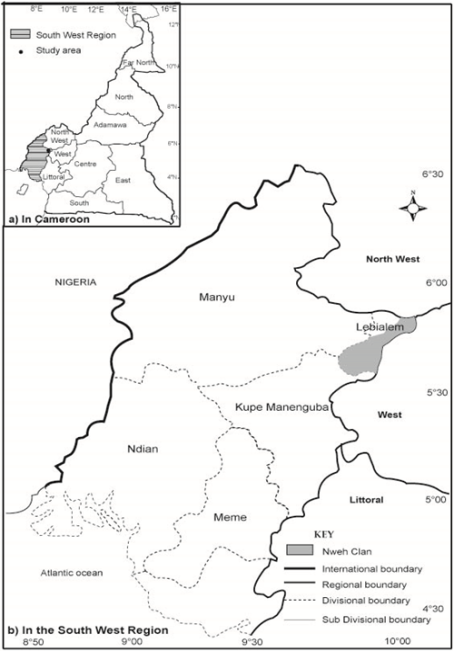
This study analyzes the different mechanisms adopted by the Nweh people to protect their crops from failure and destruction. The Nweh people have developed various indigenous methods of protecting their crops from destruction and crop failure. Furthermore, imported insecticides and pesticides used for pest control are too costly for many farmers in Africa, leaving them to harness the resources that are locally available as their primary option. In addition to these resources, farmers in Nweh employ their ingenuity in their crop protection strategies which are part of their rich cultural heritage. These techniques are useful skills acquired empirically, based on observation and experience and passed on from one generation to another, and include a wide range of non-chemical options. Our findings show that, the farmers who have attained the secondary school level and above use more chemical pesticides to protect their crops than those who ended at the primary level of education as well as those who have never gone to school. This category of persons easily accepts innovations and have money to buy chemical pesticides. Most farmers with low level of education use traps to protect their crops from destruction by pests. Christian informants who said they do not use spiritual items like statues and amulets to protect their crops. Most of these informants said that only God protects crops and therefore rejected the idea of spiritual traps even though many used physical traps and deterrents. In our study, these traps are categorized into human, animal, and spiritual traps. Apart from traps, the farmers also use natural deterrents to prevent their crops from pests and crop diseases, such as scarecrows as well as cleansing rituals to protect crop failure. The traps used by Nweh farmers are indigenous and demonstrate a kind of creativity, different from plant stands that are grown to attract insects away from main crops or other organisms like nematodes from pest attack where protection is achieved either by preventing the pests from reaching the crop or by concentrating them in a certain part of the field where they can be destroyed
. The main themes discussed in this paper are comprised of farm practices used by the Nweh farmers to fight against crop loss and crop failure. The themes are; Crop protection with the use of traps; Crop protection with animal droppings; protection of crops from pests and diseases with the use of deterrents, and Crop protection with the use of the cleansing rituals.
3.2.1. Protection of crops with Traps
During fieldwork, we observed that traps play a crucial role in protecting food crops in Nweh. The type of trap employed varies according to individual preference, financial capacity, and the availability of materials. While some farmers travel to Nganafu (medicine man) to obtain ritual fetishes believed to provide spiritual protection for their farms, others rely on their ingenuity by purchasing wire and constructing physical traps. Consequently, Nweh farmers employ a variety of trapping methods, including human traps, spiritual traps, animal traps, and bird traps, each serving specific protective functions within the farming system. The diversity of traps used by Nweh farmers reflects the coexistence of indigenous ecological knowledge, cultural beliefs, and practical adaptation within their agricultural system. The classification of traps into human, animal, bird, and spiritual traps further reveals the Nweh people's nuanced understanding of the diverse threats confronting agricultural production. Overall, the trapping practices of Nweh farmers demonstrate that agricultural knowledge is socially and culturally constructed.
3.2.2. The Human Trap “Nchep”
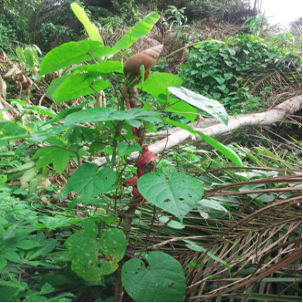
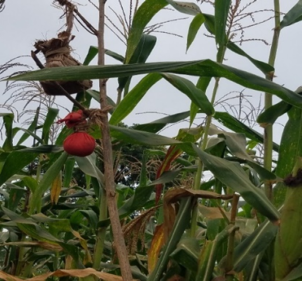
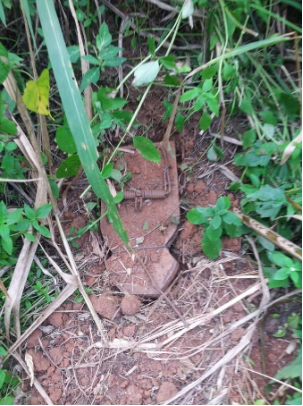
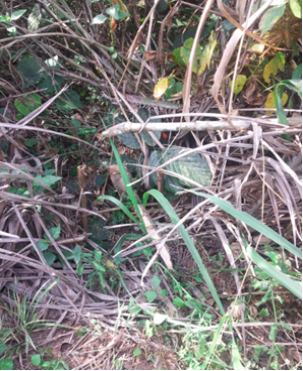
Technological advancements such as electrical fencing, drones, sonic deterrents, smart trapping and robot dogs, which are considered costly by Nweh famers. Instead, they rely on Nchep to protect their crops from human theft. A “Nchep” is an object, believed to have magical powers and which is used to prevent thieves from stealing food crops in Nweh (see
Figure 1 and
2). It is usually prepared by traditional medicine men or someone who inherited the skill either from an ancestor or a parent. Nchep consists of a combination of frightening objects like snail shells, red pieces of cloth, black objects, padlocks, a piece of stick sharpened at both ends and other items. These objects symbolise madness and other kinds of dreadful diseases like epilepsy and elephantiasis. As such, the objects are meant to scare people from stealing food crops from another person’s farm.
Nchep is therefore a form of social control in Nweh society, which serves as a warning mechanism to the population who are aware of the consequences of stealing crops from a farm where Nchep is implanted. By reducing the farmers’ fear of theft small-scale farmers can adjust their planting and time use decisions, while increasing crop yields and the likelihood farmers planting profitable crops more at risk of theft
.
“Nchep” is held to affect everyone in the society irrespective of who the person is. Even the relatives of the people who implant Nchep on their farms are not permitted to harvest crops from the farm except with the permission of the owner. In some cases, the farm owner has to harvest the crops himself before giving to a relative or community member who needs them. In other cases, traditional rites are typically performed before anyone else is permitted to harvest from the farm. One of these rites include giving antidotes like “alligator pepper” for the person to eat before harvesting the crops. The antidotes are often prescribed by the person who made the Nchep. This practice not only helps to maintain social order in the community but it also protects the crops leading to good crop yields.
In an interview one informant stated that,
The origin of Nchep can be traced back to the past, when morality and honesty were the order of the day, nobody dared to take something that did not belong to him/her. An item for sale like bunches of plantains; buckets of cocoyams and other cereals were placed along the road or in front of the house without the seller. The buyer just needed to take the item and put the corresponding amount in the bucket. But with increasing dishonesty, people tend to lose valuable food items to thieves. The idea of ‘Nchep’ then came up to prevent theft or punish the culprit. “When a person steals an object that has Nchep, he/she either becomes mad, is affected by a disease like; elephantiasis or the protrusion of the scrotum. In some cases when a person steals in the farm, he starts working or stands motionless until the owner comes and talk to him. (traditional leader, 74 years old)
The Nchep used by people in the different farms are typically unique and are often prepared by different herbalists or medicine men, which can lead to unique consequences or effects. Some of those who prepare Nchep claim that “they only know how to spoil, but do not know how to fix” to explain why most people suffering from a disease caused by ‘Nchep’ are rarely cured. Given the lack of cure, the fear of ‘Nchep’ instills some amount of discipline. Despites its effectiveness, the use of Nchep is gradually reducing as many have embraced Christianity and tend to see the practice as devilish or wicked. According to an informant, “Nchep” is evil and against her Christian norms. I have faith that God protects my crops and even when some crops are stolen, I still have enough to feed my family”. Unlike in the past where real charms were placed on farms, many farmers are today implanting what looks like Nchep without necessarily relying on Nganafu (medicine man) to make it. The purpose is therefore just to scare people from stealing their crops.
Figure 2. Nchep (fetish), a type of fetish for protection of crops from theft (Norah Aziamin, 2019).
Figure 3. Nchep (fetish), another type of fetish for protection of crops from theft (Norah Aziamin, 2019).
The pictures above present fetishes implanted with a sharpened stick and the others tied in bundles. The explanation given for the one with sharpened stick and snail is that, anyone who steal crops from that farm will have retarded progress. This is to say he or she will never succeed in life endeavours or will experience stagnation in all his activities. While the other tied in bundles signifies that any man who steals from the farm will get an enlarged scrotum or large breasts if the thief happens to be a woman. The red colour also signifies danger which explains why the Nchep are most often tied with red pieces of cloth. Although red cloth is common, the Nchep can also be tied with banana or other leaves but the representation and significance remain the same.
3.2.3. Spiritual Traps
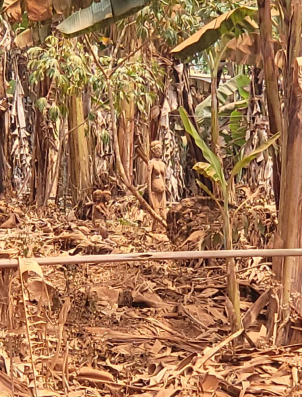
Apart from human traps, spiritual traps are set. These spiritual traps consist of amulets, statues and other ritual objects placed at the center of the farm to scare away evil spirits and keep them from destroying the crops, while occasionally these objects are designed by the farmers, they are typically made by the herbalists or medicine men who are invited to the farms by the farmers. Africans exercise their spirituality in all of their daily activities including carrying it to the fields where they are sowing seeds or harvesting crops as well as to other events and ceremonies
| [22] | Owino Harriet Nyakecho; Tsawe-Munga Chidongo; Mugalavai Violet Kadenyeka & Joshua Stephen Muoki (2022), A review of African spirituality and food sovereignty and the gender aspects along the staple food value chain among smallholder farmers in western Kenya, International Journal of Scientific and Research Publications, Volume 12, Issue 8,
https://doi.org/10.29322/IJSRP.12.08.2022.p12813 |
[22]
In an interview with one of the farmers he said “
my crops have suffered from strong winds and landslides caused by evil spirits for a long time but since these objects were put in my farm, my bananas and plantains have resisted the winds and my yield has increased.” The rural farmers give thanks to gods and ancestors for good harvests and give a religious interpretation to whatever threatens their crops and their well-being. They also expect to get a spiritual response or solutions to spiritual problems
| [22] | Owino Harriet Nyakecho; Tsawe-Munga Chidongo; Mugalavai Violet Kadenyeka & Joshua Stephen Muoki (2022), A review of African spirituality and food sovereignty and the gender aspects along the staple food value chain among smallholder farmers in western Kenya, International Journal of Scientific and Research Publications, Volume 12, Issue 8,
https://doi.org/10.29322/IJSRP.12.08.2022.p12813 |
[22]
.
Figure 4. Akrokroh (statue) kept in a farm as a spiritual trap (Norah Aziamin, 2019).
Figure 4 above shows an Akrokoh (statue) protecting a farm spiritually to ensure that spirits do not destroy the crops. Apart from spiritual protection, the Akrokoh also scare away humans and animals.
3.2.4. Animal Traps “Letah”
According to an informant, the Nweh people were largely hunters in the past and men were rarely engaged in agriculture. With men becoming increasingly interested in food production hunting activities have greatly declined even though farmers still practise the art of catching animals. This is done firstly, to prevent their crops from being destroyed and secondly, to use the animals for food. Nweh people use various types of animal traps. One known as “seh akoh” catches the animal on the leg, another called “temntong” which catches the animal on the neck, yet another is a flat trap which is called “letah” catches the animal either on the neck or the leg. To set their traps, the farmers carefully trace the frequent path of the animals (rat moles, Cane Rat/ grass cutters and porcupines) so that when the animals enter the farm, they are caught by the trap. This kind of meat in Nweh is referred to as “bush meat” and it is a delicacy in the Nweh diet. Trap Setting is a creative skill that is learnt by Nweh children or youths from their parents, friends or relatives. The traps are most often set by men but in some cases, women also set traps on their farms. The kind of trap used depends on the suspected animal destroying the crops. In order to determine the kind of animal that is destroying crops, the farmers often observe the shape of its tracks in the soil. Some other farmers said they are able to determine the smell or odour of the animal. Traps are made with strong sticks and wire or flat planks with wire. It is a technical art that must be well mastered by the farmer if he has to achieve the desired results.
Figure 5. Seahakoh “Letah or a trap” which catches the animal on the leg (Norah Aziamin, 2019).
Figure 6. temtong “Letah or a trap” which catches the animal on the neck (Norah Aziamin, 2019).
The above pictures are the kinds of traps used by the Nweh farmers to protect animals from destroying their crops. The flat trap on the left is called seahakoh and is used in catching those animals that are close to the ground like porcupines and cane rats, while the other is known as temtong which catches bigger animals like monkeys on their necks.
According to an informant, “some traps destined for animals have however turned out to become human traps. This is because the traps had caught totems of human beings in the past and the people suffered from physical injuries on their hands, legs or whatever part of the body that was caught by the trap”.
3.2.5. Birds Traps and Scarecrows.
While some farmers use birds’ traps (threads) to catch birds that destroy their crops, others resort to Scarecrows. These are items ranging from old clothes to papers and old household utensils like buckets, bottles and baskets. Farmers carry these items to the farm and hang them on trees. Scarecrows are at times made to look like people to also scare other bigger animals like monkeys. At times, items that make noise when the wind blows like pans, pots and bells are put in the farm for the same purpose. These objects are usually made by the farm owners themselves with the sole purpose to scare animals and birds, or catch the birds.
3.2.6. The Use of Animal Droppings for Crop Protection
The rearing of livestock by farmers has also been a challenge to farmers in Nweh in that the stray animals (goats, pigs, sheep) destroy their food crops. To protect the crops, one of our informants said she collects and applies a mixture of goat, pig and sheep dung to her crops to repel animals from destroying her crops. It is thought that animals do not feed on their own droppings, for that reason, the animals do not eat the crops on which their droppings have been sprinkled. There is an increase in the use of animal droppings as fertilizers in Nweh as it is less costly than the chemical fertilizers sold Nweh.
3.2.7. Protecting Crops from Pest and Diseases with the Use of Deterrents
In order to fight against pests and crop diseases, Nweh farmers use indigenous methods like the use of wood ash, spices and rituals in cases where witchcraft or other spiritual practices are suspected to be the cause of the crop diseases. Interest in plant-based insecticides has increased considerably and some farmers have adopted new methods of fighting pests and crop diseases in their farms and at home. In their farms, wood ash is used for the treatment of infected crops before planting. At home, the harvested crops are stored with the use of massopo (leaves dried and put in containers with the food to be preserved), cypress, kolanuts, pepper or other spices like “country onion” All these items are used in the preservation of cereals and seeds like beans and corn.
The protection and preservation of tubers remain a big challenge to the Nweh farmers. Wood ash has become very useful in that it protects seedlings from pests and diseases. We observed in the field that wood ash is sprinkled on cocoyam seedlings during seed preparation as well as on crops during the early stage of seed germination. “From time immemorial, wood ash has been used by the Nweh farmers and is still being used today”. It is an agro-ethnotechnological method of preventing pests from affecting crops. The farmers gather wood ash from their kitchens after cooking and carry to their farms to protect their crops.
In an interview an informant said, “I sprinkle wood ash on my crops to prevent them from being eaten up by caterpillars, and also from being affected by a pest called “parama”. The pest “parama” is a new pest and is believed to have been brought to Nweh by witches or wizards. This pest retards the growth of plants, and the crop eventually dies off, leaving the cocoyam seed affected with very small sizes of corms or without corms at all. Many farmers have suffered and continue to suffer the effects of this pest, without any solution or remedy from the agricultural extension workers. According to a field extension worker, the pest is gradually facing extinction as agricultural researchers are working on ways of completely eradicating it. However, it was very clear in the field that farmers adoption of new technology has been slow and ineffective in Nweh. According to Essy et al, 2023, training significantly and positively definitely influences the adoption new practices.
3.2.8. Protection of Crop Failure with the Cleansing Ritual (ntouh alleh)
Food production rituals are integral to Nweh farming practice. They are prescribed by the traditions of the people. Food production rituals in Nweh are performed by individuals, groups or by the entire community in arbitrary places or in places specially reserved for that. It could be either in public, in private or in the presence of specific people. A ritual in Nweh may also be performed on specific occasions or at the discretion of individuals or communities. Given that culture is created in response to an existing problem, this ritual is culture created to prevent crop failure in Nweh, as well as to increase crop yields. One of such community action is land cleansing. The cleansing ritual in Nweh is not only meant to protect their crops from the spirits but also to increase soil fertility and also human fertility. It is considered that when the soil is fertile, much food is produced, humans eat well and are also able to produce healthy babies.
The land cleansing ritual is usually performed by herbalists (Beganafu). Before the cleansing ritual is performed, the Fon of the village with his Chiefs and notables go to the “Lefem” (village secret forest), and with strongest sacred society of the land they take the decision to cleanse the land. This is in response to prolonged periods of drought or excessive rainfall which according to an informant is highly unusual in Nweh. It was also performed in response to the presence of many problems in the community like crop failure, poor harvest, the presence of evil spirits, strong winds, natural disasters like landslides, hunger, infertility and many deaths. Such problems were an indication that the ancestors are unhappy and the only solution is to cleanse the land. On the agreed date, the community assembled at the Fon’s palace (where the traditional leader lives) with all their planting seeds and farm tools. We directly observed the cleansing ritual which was as follows;
The land cleansing ritual started with the selection of the traditional medicine men (herbalists/Beganafu), considered the most powerful in the land to perform the work. These herbalists came with herbs and the smallest types of animals like toads, rats, frogs, lizards, chameleon and others. The farmers too were asked to come with their farm tools and seeds. While the women came with hoes and seeds like cocoyams, yams and plantains, the men came with cocoa, coffee seeds and cutlasses. The animals were cut into very small pieces and mixed with the herbs (nven) and the various plants that were brought by the farmers and the concoction (Nduoat) was sprinkled on the farm tools with the use of palm fronds. After this, the concoction was tied on leaves and given to every farmer present to drop at the centre of his or her farm. Having received the concoction, each farmer had to drop any amount of money, which must be a coin in front of the herbalists as a sign of appreciation, could be dropped as no specific amount of money was demanded by the herbalists. After cleansing the land, the herbalists gave instructions that no bush burning was allowed in the community that year.
According to an informant who is a notable; “the above ritual ceremony had a lot of symbolism as bringing items together by the population signified community unity, tying of the concoction in bundles represents fertility while the use of small animals is a kind of animal sacrifice to the gods. Most of the animals used are those animals that are not consumed by community members”.





 Share This Article
 Twitter
 Linked In
 Facebook
 Copy
Copy Download